How to Choose the Right Die Cut for Cup Fan?
When sourcing paper cup fan, one of the most critical yet overlooked technical decisions is the die-cutting method. It doesn’t just affect the cost; it dictates the final aesthetic, the production stability, and the brand positioning of your product.
So, how do you choose the right die cut for your production? This guide breaks it down in a practical and easy-to-understand way.
What is Die Cutting for Paper Cup Fan?
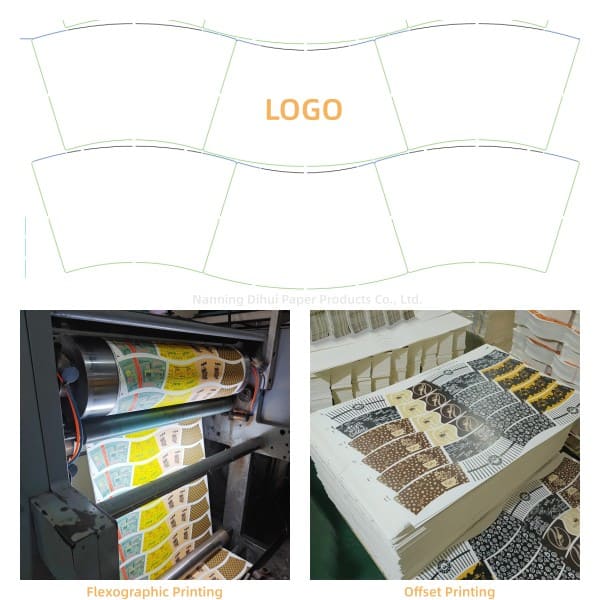
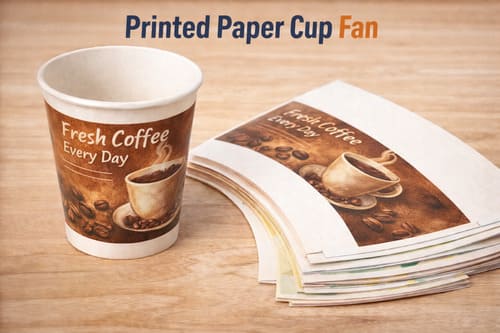
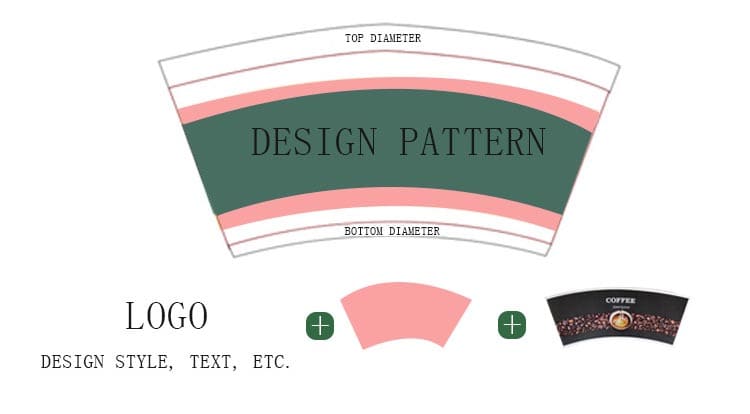
Die cutting is the process of cutting printed paper roll or paper sheet into fan-shaped blanks that will later be formed into paper cup fan. While the process may seem straightforward, the layout structure and cutting method can vary significantly.
In general, there are three common types:
- Single Slanted Die Cut
- Single Straight Die Cut
- Double Straight Die Cut
Each has its own advantages, limitations, and ideal applications.
1.Single Slanted Die Cutting
The seam line is slanted (Slanted Edge); when the slanted, fan-shaped blank is rolled into a cup, the seam runs diagonally rather than forming a straight line perpendicular to the cup rim.

Advantages
- Exceptionally high material utilization rate, resulting in virtually no edge waste and maximum material savings.
- The angled edges allow for tight, interlocking nesting; with no excess waste between individual blanks, the cost advantage is significant.
- Smooth die cutting process with fewer blockages.Better stress distribution during forming, improving roundness.
Limitations
- The seam on the cup becomes slanted instead of vertical
- Higher difficulty in print alignment
- Less accepted by brands due to visual aesthetics
Why Slanted Seams Are Less Popular
Although slanted die cutting is technically efficient, many buyers avoid it for branding reasons.
- The seam appears visually unbalanced
- It can disrupt vertical designs, logos, or text
- Premium or minimalist cup designs often require a straight seam
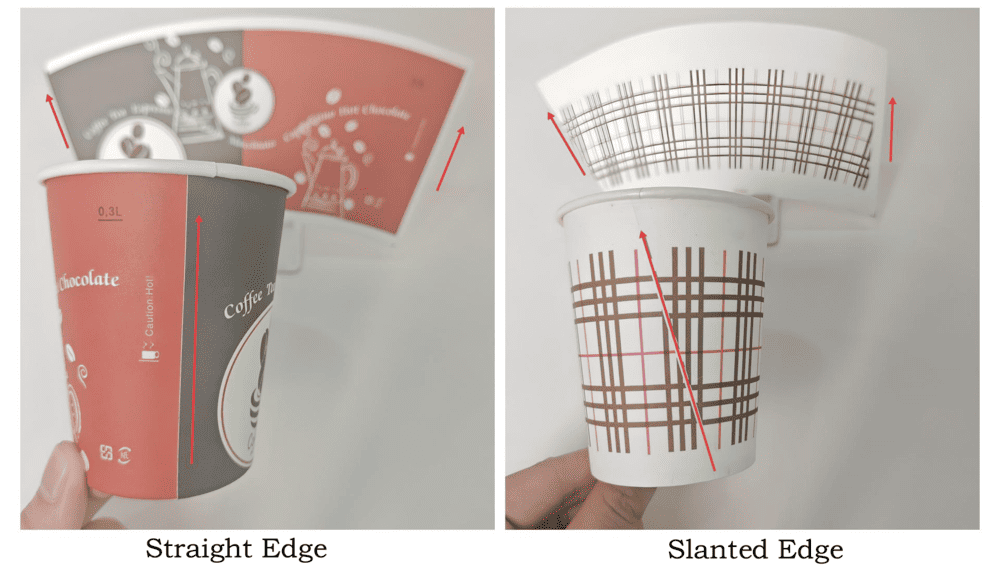
Therefore, for high-end or design-sensitive products, straight die cut (single or double) is still the preferred choice.To help you visualize this, we provide free samples so you can test the “slanted seam” look before committing to a bulk order.
2.Single Straight Die Cut
Single die cut uses a shared cutting line between adjacent cup fans. This means one blade cuts two edges at the same time, minimizing material waste.
Suitable for paper weights ranging from 150 to 320 gsm, this solution is designed for standard straight-walled paper cups—specifically conventional products characterized by large production volumes, cost sensitivity, and an absence of complex embossing or irregular shapes.

Advantages
- High material utilization (almost no waste edge)
- Lower production cost (typically saves 5–10% paper)
- Faster die cutting speed
- Simpler die structure and lower tooling cost
Limitations
- Waste and finished pieces may stick together, especially at high speed
- Lower forming stability due to lack of buffer space
- Not suitable for complex shapes or special designs
- Limited flexibility in layout (same cup size required)
In practice, this method is widely used for standard cups with tight cost control requirements.However, based on our team’s experience, many customers initially choose single die cut for cost reasons, but later switch methods when facing stability issues during high-speed production.
3.Double Straight Die Cut
Unlike single die cut, double die cut uses independent cutting lines for each paepr cup fan, leaving a waste edge between them.
Also Suitable for paper 150 to 320 gsm,products requiring high molding precision, orders involving mixed-specification layouts, and orders necessitating reliable waste removal.

Advantages
- Cleaner waste removal and smoother production
- Superior Accuracy: The waste acts as a buffer, reducing paper tension and ensuring the most consistent cup dimensions.
- Design Flexibility: It allows for “mixed imposition,” meaning you can print different designs or slightly different sizes on the same sheet
Limitations
- Higher material waste (typically 5–15%)
- Slightly lower production speed
- Higher tooling cost
If your project involves intricate logos or high-end branding, we often recommend this method. You do not need to worry about overall production speed, as we have 11 die-cutting machines and can prioritize your order.Our free design service can help optimize your layout to minimize this waste as much as possible.
4.When Are Die Clamps Necessary?
Choosing the cut is only half the battle; technical execution is the other. In our production experience, we always implement “Die Clamps” in the following scenarios to ensure your order arrives flawlessly:
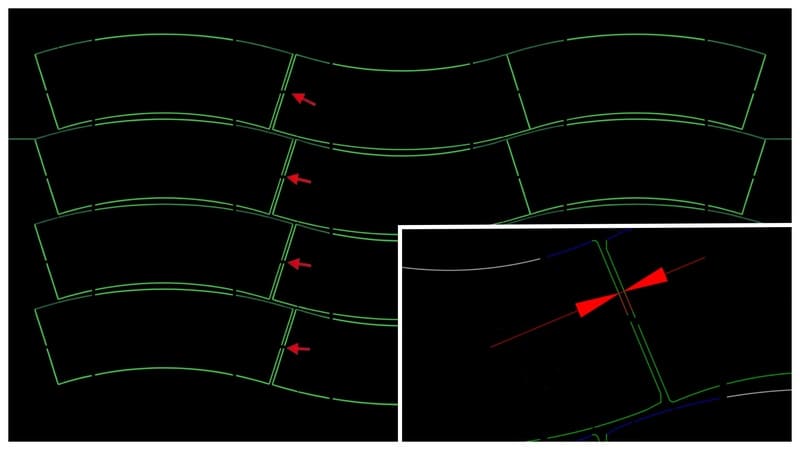
They are typically required in the following situations:
- Single die cut production→ Helps separate waste from finished pieces
- High GSM paper (stiffer material)→ Reduces rebound and sticking issues
- Small or narrow cup fans→ Prevents waste from pulling finished pieces away
- Straight edge layouts (especially double die cut)→ Breaks long continuous waste strips
- Heavy ink coverage printing→ Avoids sticking caused by ink
- High-speed production lines→ Improves stability and reduces downtime
From an operational perspective, adding die clamps is not just a technical option — it is often a standard practice for improving yield rate.
Industry Insight: Balancing Cost and Stability
In real production, the cheapest solution is not always the most economical in the long run.For example, we once worked with a customer who insisted on single die cut to reduce material cost. However, during high-speed production, they experienced:Frequent paper jams,Unstable cup forming,Increased defect rates
After switching to a more suitable die structure with proper clamp design, their overall efficiency improved significantly — even though the material cost slightly increased.
This reflects a common industry truth:Stable production often saves more than material cost alone.
A Practical Approach from an Experienced Supplier
At Nanning Dihui Paper Products Co., Ltd., we understand that every customer’s production setup is different. With multiple die cutting machines and extensive experience in paper cup fan production, we support customers by:
- Offering 150–320gsm paper options for different applications
- Providing free design support for optimized fan layout
- Supplying free samples for testing before mass production
More importantly, we help customers choose not just the material — but the most suitable die cutting solution based on machine speed, paper type, and cup design.
Choosing the right die cut for paper cup fans is not just a technical decision — it’s a strategic one that affects your cost, efficiency, and product quality.By understanding the differences between single, double, and slanted die cutting — and knowing when to use additional techniques like die clamps — you can make a more informed and profitable decision for your production line.
If you’re unsure which option fits your needs, it’s always worth consulting with an experienced supplier before moving forward.