Is It Too Late To Enter The Paper Cup Industry Now?
As global sustainability movements accelerate, entrepreneurs frequently ask us two critical questions: Is running a paper cup industry manufacturing business still profitable? and Is it too late to enter the market now? At Nanning Dihui Paper Products Co., Ltd., we have been deeply rooted in the paper packaging industry for 14 years. Over the last decade and a half, we have partnered with diverse clients across China and worldwide. Leveraging this rich, hands-on experience, we can confidently tell you that while the market has evolved, tremendous opportunities await those who enter strategically.
The Global Profit Map: Where is the Growth?
Profitability in paper cup manufacturing is highly regional. While some markets are competitive, others are experiencing a “gold rush” due to legislative changes and evolving consumer habits.
1. The Middle East: The High-Margin “Blue Ocean”
The GCC countries, particularly Saudi Arabia and the UAE, represent some of the highest per-unit profit margins globally.
-
The Catalyst: The UAE’s nationwide ban on single-use plastic cups and cutlery, effective January 2026, has left a massive vacuum that paper must fill.
-
Profit Potential: Net profit margins in these regions often hover between 15% and 20%.
-
The Trend: Consumers here are less price-sensitive and more focused on premium, eco-friendly options. There is a massive appetite for PFAS-free and fully compostable coatings. Saudi Arabia alone accounts for 35.5% of the regional market share, driven by a massive expansion in tourism and Quick Service Restaurant (QSR) networks.
2. Southeast Asia & Africa: The Volume Drivers
In countries like Vietnam, Indonesia, and Thailand, the “Coffee and Tea Culture” is exploding.
-
Urbanization: Rapid urban growth and the dominance of food delivery platforms have spiked demand. In Vietnam, paper packaging demand is projected to grow by 12% in the near term.
-
Africa’s Boom: Africa is currently in a “dividend period” for the paper cup industry. As of 2026, it is one of the fastest-growing regions for paper cup machinery and semi-finished products. The combination of a young population and a nascent but growing delivery infrastructure makes it an ideal entry point for new factories.
3. North America & Europe: The Premium Markets
-
North America: Boasts the highest premium space globally. The “on-the-go” culture in the U.S. (which holds a 43% market share) ensures a steady, massive volume.
-
Europe: While growth is steadier (around 4.6%), the Extended Producer Responsibility (EPR) schemes in Germany, France, and the UK force giants to seek highly recyclable, plastic-free coating solutions. If you can master these technical hurdles, the loyalty of European corporate clients is unparalleled.
Starting from Zero
Success in this industry depends on meticulous local research. At Nanning Dihui Paper, we often advise our new partners to follow a four-pillar market study before purchasing a single machine:
-
Product Identification: Will you produce single-wall, double-wall (for heat insulation), or specialty cups (gold/silver foil)?
-
Price Benchmarking: Analyze your competitors’ pricing. Are you competing on volume or on premium quality?
-
Location Logistics: Proximity to high-traffic areas or distribution hubs is vital to keep transport costs low.
-
Promotion & Distribution: Identify your wholesalers and distributors before the first cup rolls off the line.
Raw Materials and Supporting Supplies
A typical paper cup production setup includes:
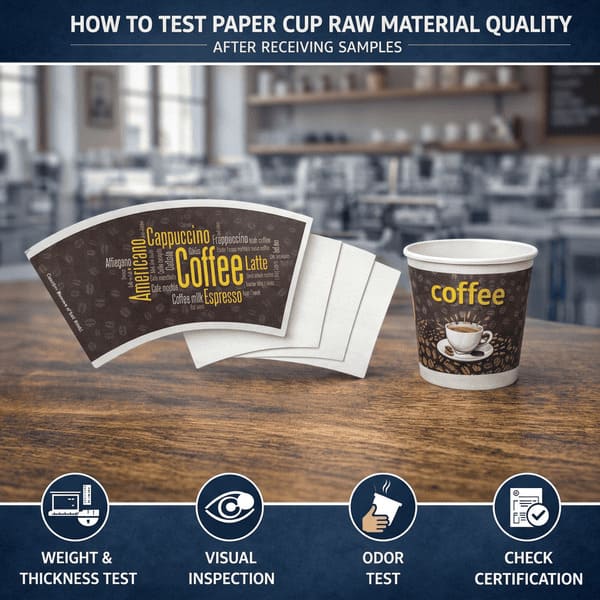
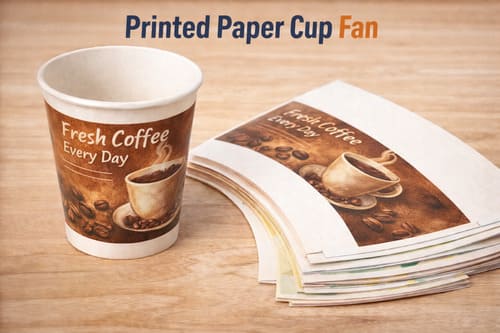
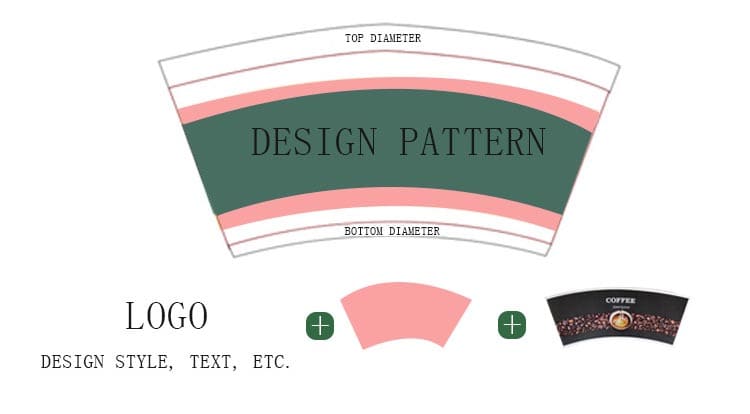
Supplied materials:Printed and die-cut paper cup fan sheets;Bottom roll paper.
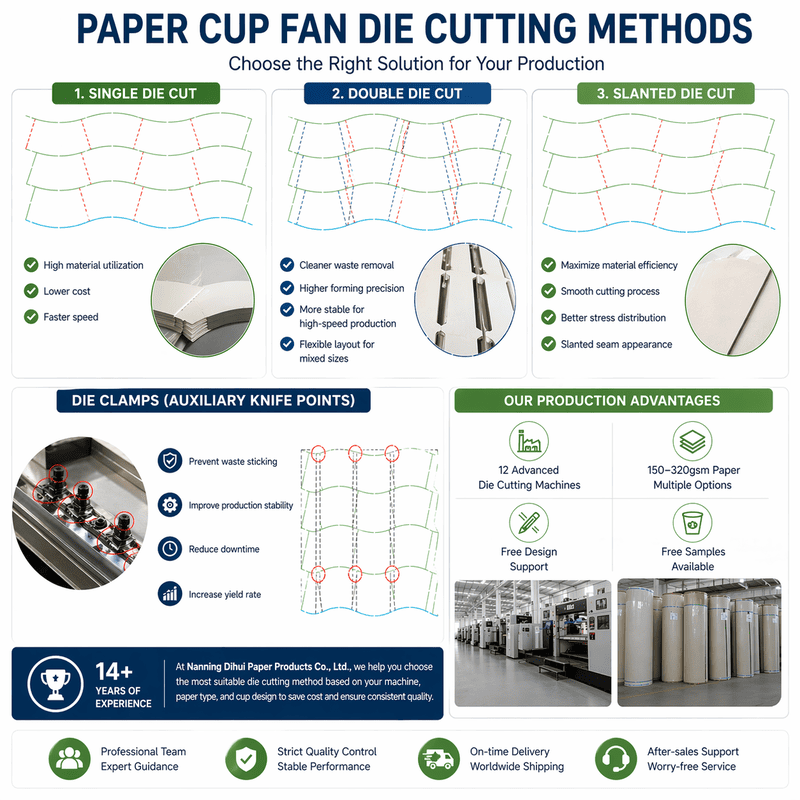
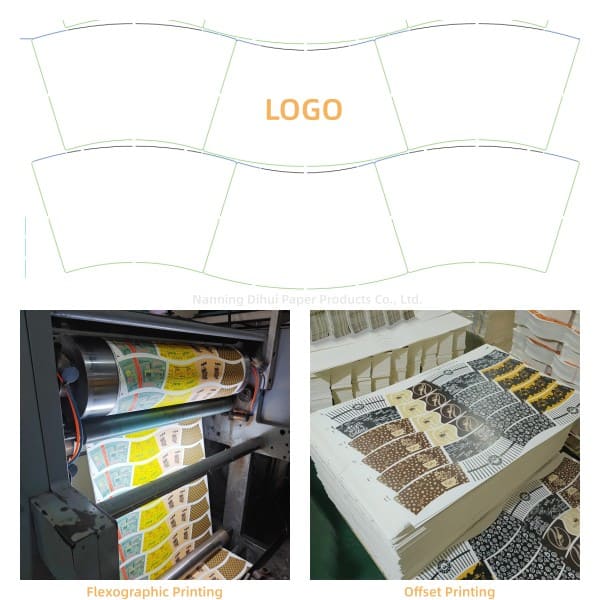
For example, companies like Nanning Dihui Paper Products Co., Ltd. support flexible production needs by offering multiple paper grades (150–320gsm) and sourcing from well-known mills such as APP, Sun Paper, and Nine Dragons. Their ability to handle both flexographic and offset printing—up to six colors—also helps clients differentiate their products in competitive markets.
Additional items you prepare:
- Packaging materials (cartons, plastic bags,Avoid exposing your product to dust and moisture.)
- Food-grade silicone oil (for smooth curling and mold release)
- Spray bottle(for better forming, depending on paper type)
- Storage racks and transport tools
These small details can significantly affect production efficiency and final product quality.
Paper Cup Machine Selection
Entering the paper cup industry can be profitable, but one of the biggest challenges for new manufacturers is choosing the right paper cup machine. Based on years of industry experience, we always advise new factories not to focus only on price or speed, but on stability, compatibility, and long-term production efficiency. A machine that frequently stops, produces high defect rates, or does not match your paper cup raw materials will quickly increase costs and affect your ability to deliver orders. Instead, it is far more important to choose equipment that runs smoothly for long hours, is easy to maintain, and works well with your selected paper (such as PE-coated paper, kraft paper, or bamboo pulp paper). In fact, many production issues are not caused by the machine alone, but by the mismatch between the machine, molds, and raw materials.
At Dihui Paper, we have seen real cases that highlight this problem. One of our customers once purchased a paper cup machine from a low-quality supplier. During production, the machine frequently experienced paper feeding jams, the cup bottoms were not properly sealed and easily fell off, and the finished cups leaked during testing. This seriously affected his production efficiency and customer trust. To solve the issue, we consulted our experienced technicians in our own factory and worked closely with his paper cup machine supplier in China. Through joint adjustments in machine settings and raw material matching, the problem was eventually resolved. Because we not only supply paper cup raw materials but also produce paper cups ourselves, we have practical, hands-on experience that allows us to help customers quickly identify and solve such issues.
In short, for new entrants, buying a paper cup machine is not just about purchasing equipment—it is about choosing a reliable solution backed by real industry experience.
Conclusion
In my 14 years in this trade, I’ve noticed that the most profitable factories aren’t the ones with the most machines, but the ones with the best material consistency. Using inconsistent paper grades leads to machine jams and high reject rates.
By choosing a reliable partner—one who can offer a variety of paper brands like APP or Sun Paper—you ensure your machines run at peak efficiency. At Dihui Paper, we focus on providing that stability. Whether you need a specific GSM for a sturdy coffee cup or a unique 6-color design to help a local brand stand out, our infrastructure is built to support your growth.
As global legislation continues to tighten against plastic, the demand for high-quality, sustainably produced paper cups will only climb.Setting up a factory is a journey of precision. With the right market research, a commitment to quality machinery, and a stable supply chain, this remains one of the most resilient manufacturing investments available today.