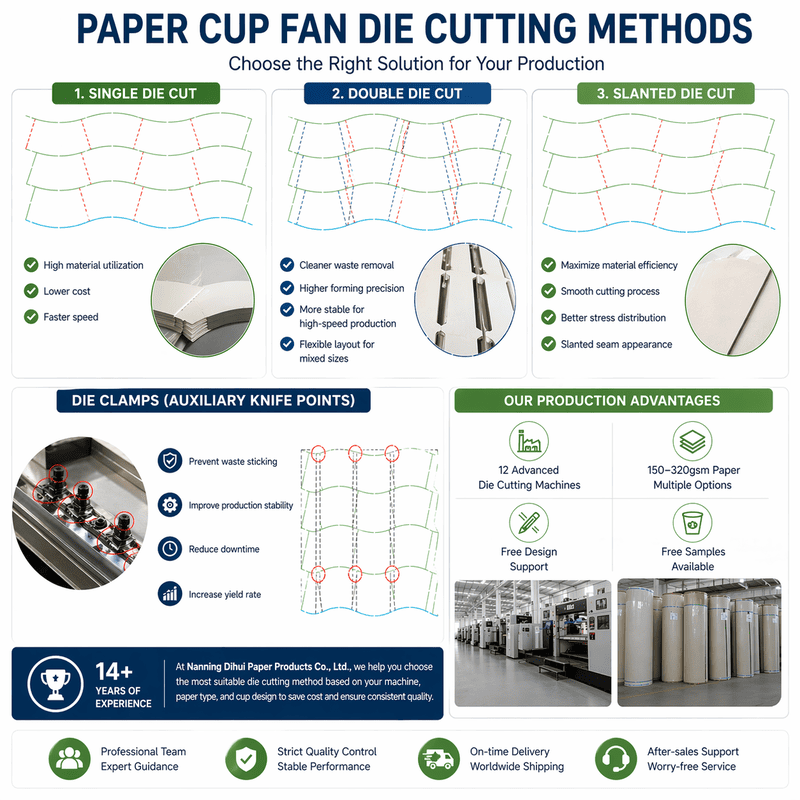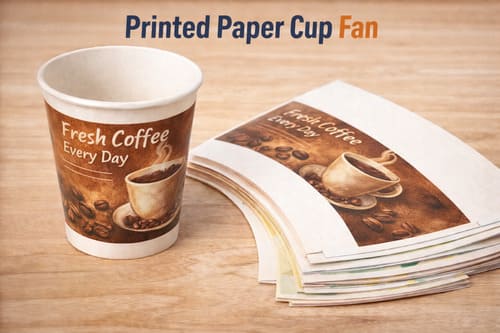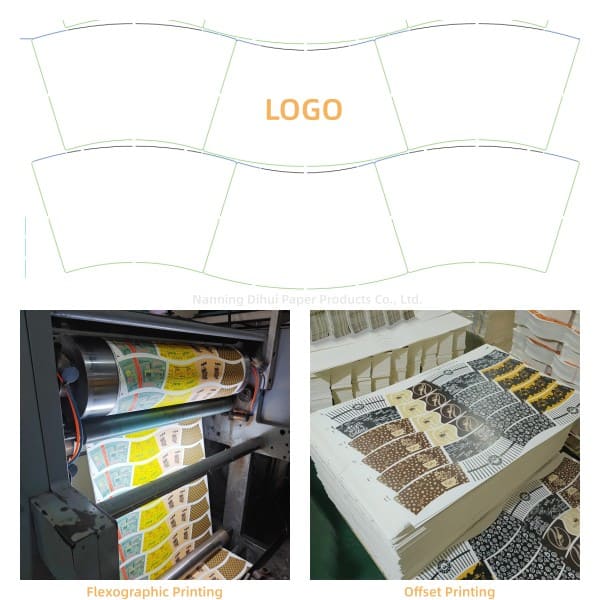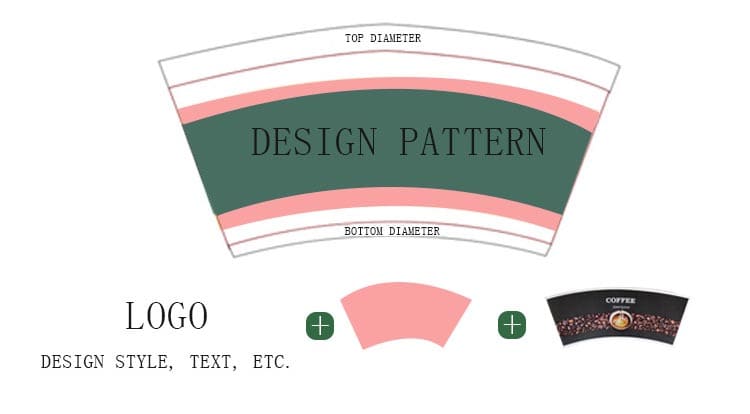
How to test the quality of paper cup fan sample?
When sourcing paper cup raw materials, especially paper cup fan, many buyers focus heavily on price. However, experienced manufacturers understand that quality testing is the real starting point of a reliable supply chain.Whether you are a seasoned manufacturer or a newcomer, knowing how to professionally evaluate these samples is crucial.In this guide, we will walk through a practical, factory-level method to evaluate paper cup material quality step by step.
Step 1:Preparing for Your Sample Request
Verification of Certifications
Ensure the supplier provides the necessary paperwork. At a minimum, ask for:
-
Food Grade Certificates (Material safety reports/FDA/SGS).
-
FSC Certification (for sustainable sourcing).
Before you even receive the package, clarity is key. You must define your technical requirements:
-
Determine the Base Weight (GSM): For instance, are you looking for a standard 170GSM + 15PE single-wall paper cup fan sample ?
-
Identify the Coating: Do you need single PE, double PE (for cold drinks), or specialized coatings like gold/silver foil or PLA?
-
Request the Right Format: To get a true feel for the quality, ask your supplier for a mix of:
-
Finished cups (to see the final look).
-
Blank paper cup fans.
-
Printed paper cup fans (to check ink quality).
-
- Tip: If you already own a cup-making machine, send your mold drawings to the supplier. At Dihui Paper, we can custom-cut samples according to your specific mold so you can run them directly on your machines for a “real-world” test. If you just want to check the paper texture, an A4-sized sheet is usually sufficient.
Step 2:Initial Physical Inspection
The moment the sample arrives, perform a visual and tactile check.
-
Surface Flatness: Does the fan lie flat? Look for “waves,” wrinkles, or curling edges. These issues often cause feeding jams in high-speed machines.
-
Coating Uniformity: Hold the paper against the light. Are there white spots or missed spots in the PE coating? Uneven coating is the primary cause of leakage.
-
Edge Precision: Check if the die-cutting is clean. Burrs or jagged edges on the paper cup fan will prevent a perfect seal during the heating process.
-
Printing Clarity: If it’s a printed sample, check for ink smudging or “off-setting.” At Dihui Paper, we utilize two advanced printing presses supporting up to 6 colors with both Flexo and Offset printing options. This ensures that even complex logos remain crisp and odorless.
Step 3:Technical Measurements (Grammage & Thickness)
Don’t just take the supplier’s word for it.
-
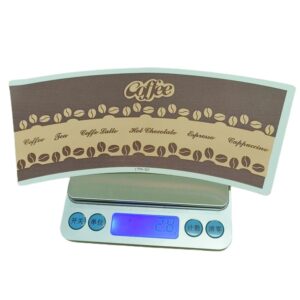
Grammage Test: Use a precision electronic scale. If you ordered 250g + 15g PE, the weight should reflect that. Insufficient grammage leads to a “soft” cup that collapses under pressure.
-
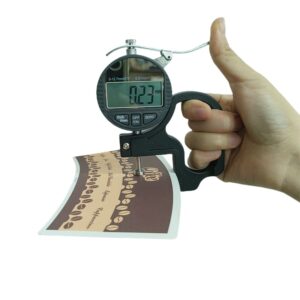
Thickness Consistency: Use a micrometer to measure different points on the fan. Inconsistent thickness causes uneven pressure during heat sealing, leading to the dreaded “leaky cup” syndrome.
Step 4:The “Scent” Test: A Food Safety Necessity
This is where many low-end suppliers fail. Smell the paper. It should have a neutral, slight wood pulp scent or no smell at all.
Avoid print paper cup fan sample with:
-
Pungent chemical odors.
-
Strong plastic smells.
-
Ink-heavy stenches.
Case Study: We once had a client who switched to Dihui Paper because their previous supplier used sub-brand raw paper with a sharp, irritating smell. In the food industry, an unpleasant smell equals a safety risk, and customers will not hesitate to complain or return products. We pride ourselves on using premium brands like Sun Paper, APP, and Enso to ensure a 100% food-grade experience.
Step 5:Hand-Feel and Flexibility
Experience tells us that the “touch” of a cup matters to the end consumer.
-
Too Soft: The cup will collapse when held.
-
Too Brittle: The paper will crack during the rim-rolling (curling) process.
At our factory, we also produce finished cups and bowls for the domestic market. Feedback from our local clients consistently shows that the “stiffness-to-touch” ratio is one of the top three factors in perceived quality.
Step 6:Functional Performance Testing
This is the most critical stage. You need to simulate how the paper performs under stress.
A. Water Leakage & Softening Test
If you are testing for hot drinks, use a single PE sample; for cold drinks (where condensation occurs on the outside), use double PE.
-
Form a sample cup and pour in boiling water (80℃-100℃) or iced carbonated drinks.
-
Observe at 30 minutes and 1 hour.
-
Check for: Seepage at the bottom, “sweating” through the paper walls, or softening of the structure.If the paper cups exhibit leakage or excessive softening, the material is considered substandard.
B. Heat Sealing (The “Make or Break” Test)
The PE coating must perfectly fuse with and bond to the paper cup fan sample.
-
Method: Use your machine or a manual heat sealer to bond the side seam. Once cooled, try to pull it apart by hand.
-
Pass: The paper fibers should tear before the seal breaks.
-
Fail: If the seal “peels” off easily, the PE quality is poor, and your cups will leak at the seam.
Step 7:Machine Runnability (Forming Test)
If you have already received the paper cup machine, and the samples were produced based on the mold drawings for your machine, you can then use these samples to test both the materials and the machine.
-
Heat Sealing Performance: Does the PE bond quickly at your machine’s standard temperature?
-
Curling Quality: Does the rim roll smoothly without cracking or wrinkling? Paper with incorrect moisture content often fails here.
-
Stability: Does the machine jam? High-quality paper cup raw material should allow for continuous, stable production without frequent adjustments.
In the Dihui Paper workshop, every batch of paper we produce undergoes rigorous leak and forming tests. We provide assistance whenever customers encounter issues while testing samples. As we also manufacture paper cups ourselves, our machine technicians possess extensive experience—for instance, we have previously assisted customers in adjusting their machinery and resolving paper-jam issues.We don’t just understand raw materials; we understand the mechanics of cup production.
Step 8:Specialized Tests: Oil & Pressure
-
Pressure Test: Squeeze the finished sample cup. It should offer firm resistance. A cup that “flattens” easily provides a poor user experience.
-
Grease Resistance: If you are producing paper bowls for soup or oily food, pour in warm oil and wait for 30 minutes. The oil should not penetrate the paper fibers or cause discoloration.
Many of our clients producing paper bowls prioritize this test, as it directly affects product usability in food service environments.
Final Thoughts
Many new buyers make the mistake of prioritizing the lowest price per ton. However, the logic should always be: Stability First, Price Second. * Poor quality leads to: Mass leakage → Customer complaints → Batch recalls → Brand ruin.
At Nanning Dihui Paper Products Co., Ltd., we offer a wide range of choices from 150-350gsm using top-tier paper brands like Sun Paper, Five Star, APP, Nine Dragon, Yibin Paper, and JINGUI. Whether you need standard white paper, kraft paper, or specialty materials like gold or aluminum foil paper cup fans, we provide free design services and free samples for your testing.That’s where quality begins—and where long-term cooperation is built.