Single or Double Blade Die-Cutting for Cup Fans?

The die-cutting quality of paper cup fans directly affects three key production indexes: cup forming efficiency, rejection rate and side seam bonding strength. For disposable cup manufacturers, choosing the right blade configuration is therefore a critical decision. Many production managers fail to tell the differences between single blade and double blade die-cutting setups. This oversight leads to repeated production troubles, including burr edges, coating delamination, frequent machine jams and failed food contact safety tests.
What Is Single Blade Die-Cutting?
Single blade die-cutting uses a single cutting rule structure. It is the most common entry-level option for paper cup fan die cutting. This mold has a simple structure. It supports quick size changeover and low upfront tooling cost. It delivers stable performance on standard 150–210gsm PE coated cupstock, fitting small-batch orders with multiple SKUs.
Yet single blade cutting only generates shear force from one side. When you process high-GSM thick cupstock, PLA coated paper or bamboo pulp materials, several defects may occur easily. These include uneven cut surfaces, squeezed coating layers and pulled paper fibers. Industry statistics show standard single blade dies keep steady cutting quality for 80,000–120,000 strokes only. Mass production demands more frequent blade sharpening or replacement.
What Is Double Blade Die-Cutting?
Double blade die-cutting adopts an opposing dual-blade shearing structure. Precise blade alignment helps it create neat cuts without burrs. It is the top choice for high-speed automatic rotary die cutting lines and premium cup production lines.
Blades apply balanced cutting force from two sides. Even when processing 250–350gsm thick board and biodegradable materials, this setup barely causes coating extrusion or fiber shedding. Its cutting edge precision hits ±0.02mm. This largely strengthens side seam adhesion and lowers liquid leakage risks. The blades can work for 300,000–400,000 strokes, roughly three times the service life of single blade dies. It cuts long-term maintenance costs accordingly. Its only downsides are higher initial mold cost and longer size adjustment time.
Core Differences: Single vs Double Blade Die-Cutting
1. Cutting Quality & Food Safety Compliance
FDA 21 CFR and EU 10/2011 food contact rules require clean edges free of loose fibers. Loose paper fibers may fall into drinks and cause safety risks. Double blade die-cutting keeps burr height under 0.1mm consistently. Its output can satisfy global food packaging safety standards with ease. Single blade setups may leave tiny burrs when cutting thick or eco-friendly materials. Extra quality checks will be necessary in this case.
2. Material Compatibility
Single blade dies perform best with standard single PE coated white cupstock of regular grammage. Double blade setups work with far more material types. The list covers double PE coated paper, PLA laminated paper, water-based coated stock, kraft cupboard and bamboo pulp paper. It leaves more room for you to expand product lines.
3. Production Efficiency & Total Cost
If your annual cup output is under 5 million, single blade dies cost less at the initial stage and offer higher flexibility. For high-speed lines churning out over 20 million cups yearly, double blade setups cut rejection rates by 30–40%. They also reduce production downtime caused by blade replacement, bringing down your overall operating cost.
Expert Guide: How to Choose the Right Setup
We have served more than 300 cup manufacturers worldwide for 12 years. Our advice is to select blade types based on your order scale and raw materials:
- Pick single blade for small-batch, multi-size orders using standard PE cupstock to control tooling expenses.
- Pick double blade for mass production of branded hot drink cups and soup bowls to maintain stable quality at high running speed.
- Use double blade for all orders with PLA coating, water-based coating or bamboo pulp materials. This prevents coating damage and seam bonding failure.
- Prioritize double blade for export orders to the EU and US. It meets strict edge quality rules and reduces compliance risks.
Always conduct trial cutting with your actual cupstock before mass production. Check dimensional accuracy, edge smoothness and forming performance in advance.

Final Takeaway
Neither option works for all scenarios. Your ideal die-cutting solution depends on production volume, material selection and compliance requirements of target markets.
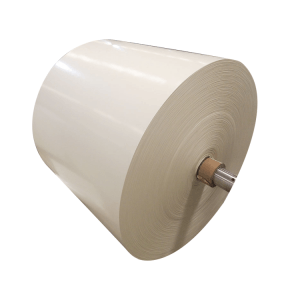
We are a professional supplier of cup raw materials. We provide blank cupstock rolls and pre-cut paper cup fans, which are adapted to both single and double blade die-cutting processes. You can contact us to get free material samples and technical matching support.